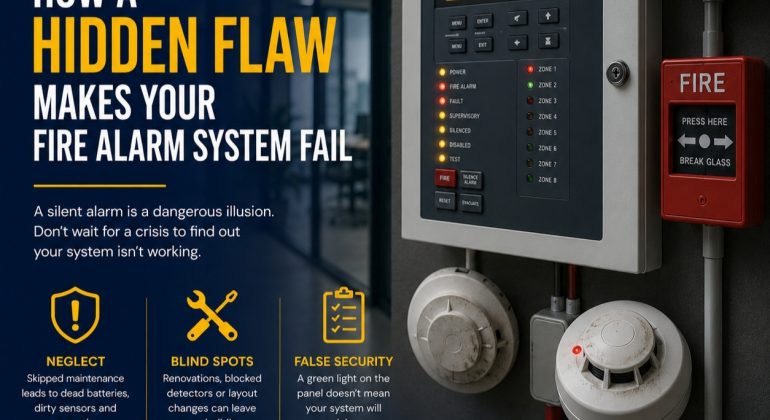

Imagine the absolute worst-case scenario for your property. A fire breaks out in a highly sensitive area, yet the building remains dead silent. The sirens do not wail, the strobe lights do not flash, and no automated alerts reach your emergency team. For many facility managers, this nightmare is an unexpected reality. Consequently, they find out too late that having a fire alarm system installed is not the same as having a working safety net.
Psychologically, human nature pushes us to trust anything that looks permanent. When a client invests millions of Naira into high-end safety infrastructure, a dangerous cognitive bias takes over. Specifically, they assume that because the hardware is new and premium, it will automatically work perfectly forever. Because the control panel sits quietly on the wall every day without complaining, it creates a false sense of security. As a result, critical maintenance gets pushed to the back burner to save operational costs.
Ultimately, true asset protection requires looking past the hardware on the wall. To protect your inventory, your corporate data, and your workforce, you must understand why these systems actually fail when seconds matter most.
Let’s strip away the engineering jargon. Here is a look at the psychological traps and technical realities that leave commercial properties completely unprotected.
1. The Complacency Trap: Neglecting Your Fire Alarm System
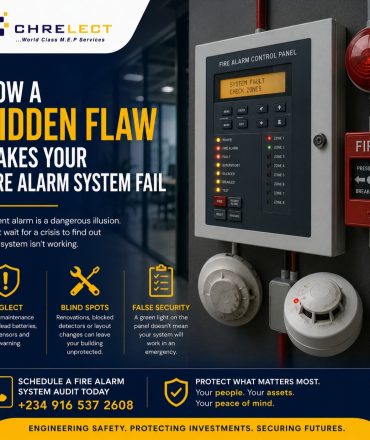
The most common reason a fire alarm system fails has nothing to do with factory defects. Instead, the primary culprit is human neglect. Many clients treat safety infrastructure like a household appliance. They assume it is a “set-and-forget” tool.
Over time, environmental factors heavily degrade electronic components. For example, dust, humidity, and fluctuating power surges wear down intelligent sensors. If engineers do not test the backup batteries routinely, those batteries will drain completely. Therefore, when a real power failure occurs during a crisis, the main panel goes dark instantly.
From a management perspective, skipping a quarterly audit seems like a harmless way to protect your monthly budget. Furthermore, nothing seems wrong on the surface. However, this missing maintenance means your primary line of defense is quietly dying in the background while the hazard spreads.
2. Post-Installation Changes: Creating a Blind Spot Error
Another major vulnerability occurs when a building’s interior layout changes long after the initial engineering team leaves the site. When a property gets a new tenant or a floor gets remodeled, managers focus entirely on aesthetics and spatial utility.
Disabling Sensors During Construction
During renovations, workers frequently cover smoke detectors with plastic to protect them from dust. Quite often, someone forgets to remove these covers after the job ends. Alternatively, contractors might add partition walls that completely block airflow to existing sensors. Meanwhile, the intelligent control panel continues to show a green light because the electrical loop is complete.
Creating Unprotected Spaces
As a result of these layout modifications, you end up with completely unprotected spaces. If an electrical fault sparks inside a newly enclosed office or a converted storage room, the smoke cannot reach the blocked sensor. Consequently, this simple oversight completely neutralizes an advanced fire alarm system, transforming a premium asset into a useless ornament.
3. Choosing a Partner to Protect Your Fire Alarm System
Preventing an emergency system failure comes down to choosing a dedicated engineering partner rather than a cheap, one-time vendor. If your property relies on unverified technicians who use substandard parts, your risk exposure skyrockets.
Your situation changes completely when you work with qualified professionals who understand local environmental challenges. In complex commercial towers or multi-use facilities, a reliable fire alarm system must receive regular diagnostics, software updates, and loop sensitivity calibration. Therefore, investing in professional oversight is a non-negotiable step to protect your building’s legacy and ensure full regulatory compliance.
Do not wait for a close call or a catastrophic failure to test your readiness. Protect your property, secure your corporate assets, and gain true peace of mind before a crisis occurs.
You can only have the best systems supplied and installed by contacting the engineering specialists at Chrelect MEP Limited today for a comprehensive fire alarm system audit of your Lagos commercial property.